


Design, train, optimize, and deploy efficient machine learning models for consumer audio products and resource-constrained edge devices. Apply quantization, pruning, distillation, and model compression while balancing accuracy, latency, memory, compute, and power requirements. Collaborate with embedded, DSP, hardware, compiler, and software teams on deployment and integration, troubleshoot model issues, develop repeatable ML workflows, evaluate emerging technologies, document findings, and mentor interns and co-op engineers.
At Bose Corporation, we believe sound is the most powerful force on earth - and for over 60 years, we have been a company built on innovation, excellence, and independence. Privately owned, fiercely customer-focused, and driven by our values, we continue to lead industries and transform lives through sound.
Today, Bose Corporation is entering an exciting new era. Across multiple global Business Units and Global Functions, we are shaping the future of audio technology, automotive, luxury, and premium experiences. We invite you to join us in this transformation.
Job Description
About the Role
Bose is seeking a Machine Learning Engineer with expertise in Efficient AI and Edge ML to join our team. In this role, you will design, train, optimize, and deploy machine learning models for next-generation audio products. You will work closely with embedded, DSP, compiler, hardware, and software engineers to bring AI capabilities to resource-constrained devices.
The ideal candidate has strong machine learning fundamentals, practical experience with efficient model development, and an understanding of Edge ML deployment constraints. Deep embedded systems expertise is not required. However, you should be able to understand deployment and integration feedback, identify model-related limitations, and quickly iterate on model architectures and training methods to improve accuracy, latency, memory usage, and power efficiency.
Responsibilities
Minimum Qualifications
Preferred Qualifications
#LI-Hybrid
At Bose, you're inspired to be and do your best and are rewarded for your unique talents! Our compensation is thoughtfully tailored to your skills, experience, education, and location, and goes beyond base salary. The hiring range for this position in the primary work location of Framingham, Massachusetts is: $141,000-$193,950.The hiring range for other Bose work locations may vary. In addition to competitive base pay we offer rewards including bonus programs, comprehensive health and welfare benefits, a 401(k) plan, plus exclusive perks designed to support your wellbeing, and a generous employee discount where you can immerse yourself in our products and experiences. We are a proudly independent company-driven by purpose, guided by our values, and united by a belief in the power of sound. As the world leader in audio experiences, we're creating what's next-pushing boundaries and delivering transformative sound experiences for people everywhere. Join us and make your next career move a mic-drop. Let's Make Waves.
Today, Bose Corporation is entering an exciting new era. Across multiple global Business Units and Global Functions, we are shaping the future of audio technology, automotive, luxury, and premium experiences. We invite you to join us in this transformation.
Job Description
About the Role
Bose is seeking a Machine Learning Engineer with expertise in Efficient AI and Edge ML to join our team. In this role, you will design, train, optimize, and deploy machine learning models for next-generation audio products. You will work closely with embedded, DSP, compiler, hardware, and software engineers to bring AI capabilities to resource-constrained devices.
The ideal candidate has strong machine learning fundamentals, practical experience with efficient model development, and an understanding of Edge ML deployment constraints. Deep embedded systems expertise is not required. However, you should be able to understand deployment and integration feedback, identify model-related limitations, and quickly iterate on model architectures and training methods to improve accuracy, latency, memory usage, and power efficiency.
Responsibilities
- Design, train, evaluate, and optimize machine learning models for consumer audio products.
- Apply Efficient ML techniques, including quantization, pruning, knowledge distillation, model compression, and efficient model architectures, to improve model efficiency while maintaining model quality.
- Work closely with embedded, DSP, compiler, and hardware engineers to deploy and integrate machine learning models on resource-constrained platforms, including DSPs, NPUs, microcontrollers, and ARM-based systems.
- Analyze deployment and integration feedback, identify model-related issues, and rapidly iterate on model architectures and training methodologies.
- Adapt models to address platform constraints such as unsupported operators, data-type limitations, memory usage, latency, compute requirements, and power consumption.
- Profile and evaluate model performance across accuracy, latency, memory footprint, model size, compute efficiency, and power usage.
- Develop and maintain repeatable workflows for model training, conversion, compilation, simulation, validation, and performance analysis.
- Collaborate across Machine Learning, embedded software, DSP, hardware, compiler, and product engineering teams to deliver production-ready AI solutions.
- Evaluate emerging ML technologies and AI-assisted engineering tools that can improve model development, deployment, debugging, and optimization workflows.
- Document experiments, technical findings, deployment learnings, and reusable engineering practices.
- Mentor interns and co-op engineers.
Minimum Qualifications
- M.S. or Ph.D. in Computer Science, Electrical Engineering, Computer Engineering, Machine Learning, or a related field.
- Strong foundation in machine learning and deep learning, including model architecture design, training, evaluation, and optimization.
- Working knowledge of Efficient ML techniques such as quantization, pruning, knowledge distillation, model compression, and efficient model architectures.
- Understanding of how model optimization techniques affect model accuracy, latency, memory footprint, compute requirements, and deployment compatibility.
- Proficiency with deep learning frameworks such as PyTorch, TensorFlow, or similar.
- Strong Python programming, debugging, and problem-solving skills.
- Working knowledge of C/C++ and the ability to collaborate effectively with engineers working on embedded and production systems.
- Understanding of Edge ML concepts and common resource constraints, including computation, memory, latency, and power.
- Ability to analyze model behavior and troubleshoot issues across training, conversion, deployment, and integration workflows.
- Strong communication and cross-functional collaboration skills.
Preferred Qualifications
- Hands-on experience with quantization-aware training, post-training quantization, mixed-precision inference, structured or unstructured pruning, operator replacement, or hardware-aware model optimization.
- Experience adapting model architectures or training workflows in response to deployment and integration constraints.
- Experience deploying machine learning models on edge devices, DSPs, NPUs, mobile platforms, wearable devices, or other resource-constrained systems.
- Familiarity with deployment frameworks and toolchains such as TensorFlow Lite, TensorFlow Lite Micro, ONNX Runtime, TVM, MLIR, or vendor-specific SDKs.
- Understanding of deployment and performance metrics such as latency, memory footprint, model size, MACs, memory bandwidth, and power consumption.
- Experience with audio ML, speech processing, acoustic sensing, or multimodal models involving audio.
- Familiarity with LLM- or agent-based engineering workflows, including knowledge retrieval, tool calling, technical documentation analysis, structured data extraction, failure diagnosis, benchmark analysis, or optimization recommendations.
- Experience building or evaluating AI-assisted tools that improve ML development, deployment, debugging, or engineering productivity.
- Curiosity about the interaction between machine learning models, software toolchains, and hardware platforms.
#LI-Hybrid
At Bose, you're inspired to be and do your best and are rewarded for your unique talents! Our compensation is thoughtfully tailored to your skills, experience, education, and location, and goes beyond base salary. The hiring range for this position in the primary work location of Framingham, Massachusetts is: $141,000-$193,950.The hiring range for other Bose work locations may vary. In addition to competitive base pay we offer rewards including bonus programs, comprehensive health and welfare benefits, a 401(k) plan, plus exclusive perks designed to support your wellbeing, and a generous employee discount where you can immerse yourself in our products and experiences. We are a proudly independent company-driven by purpose, guided by our values, and united by a belief in the power of sound. As the world leader in audio experiences, we're creating what's next-pushing boundaries and delivering transformative sound experiences for people everywhere. Join us and make your next career move a mic-drop. Let's Make Waves.
Bose Framingham, Massachusetts, USA Office
Bose Framingham, MA HQ Office
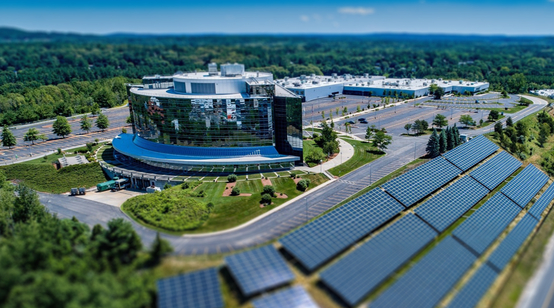
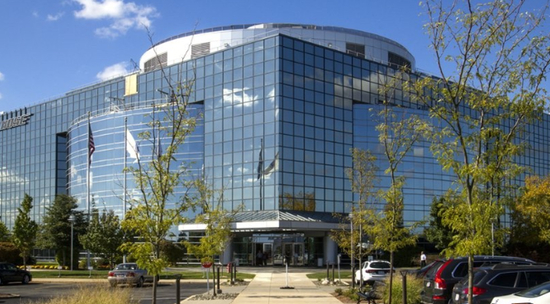
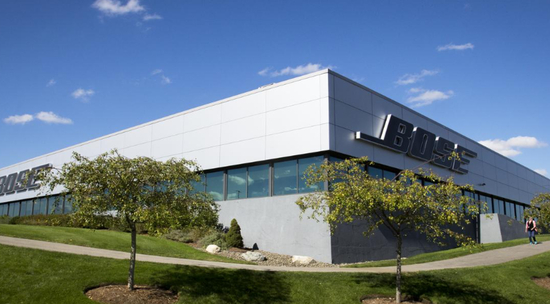
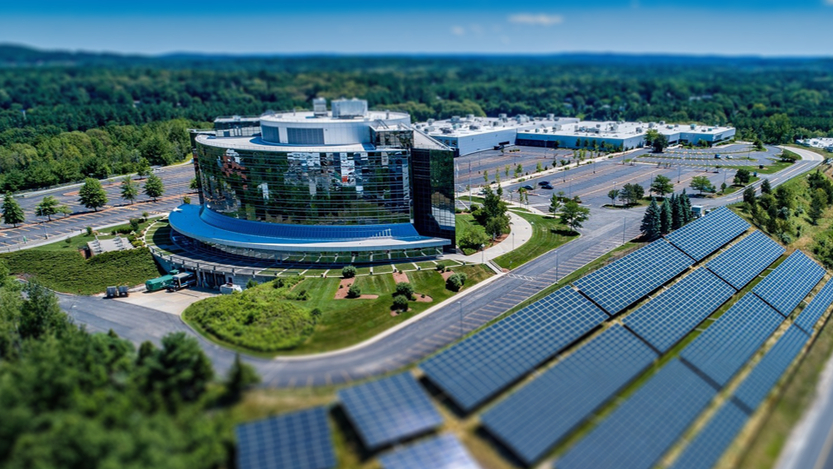
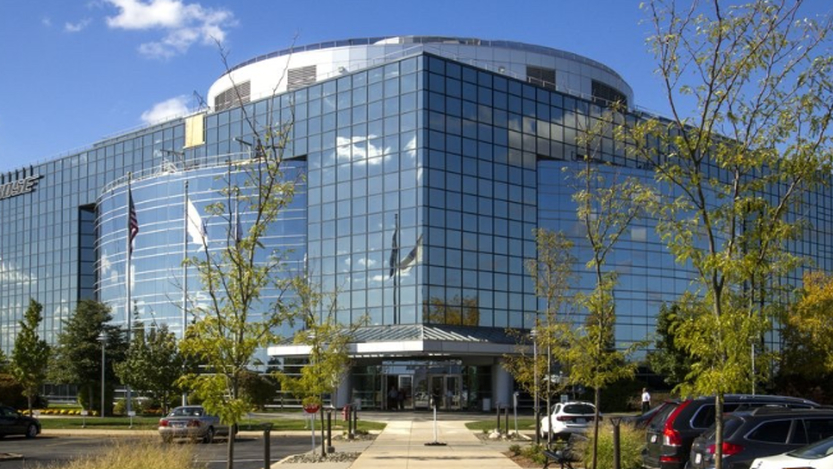
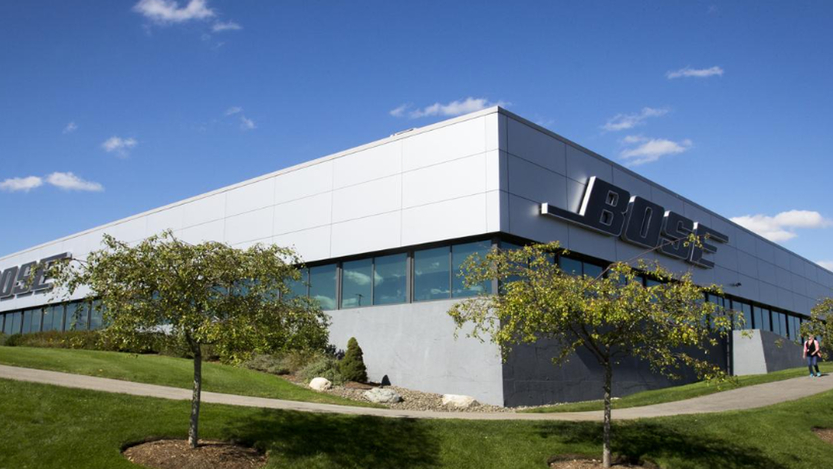
The Bose Corporation was founded in 1964 by Dr. Amar Bose, right here in Massachusetts - a legacy that continues to shape our culture of innovation and excellence. Our HQ campus comprises of three buildings and more than 1,500 team members, supporting collaboration and driving our shared mission.
Similar Jobs at Bose
Automotive • eCommerce • Hardware • Music • Retail • Software • Wearables
Develop and optimize deep learning algorithms for resource-constrained embedded audio devices. Build software prototypes, deploy models, research efficient techniques such as quantization and pruning, evaluate models, and assess neural-network hardware accelerators. The role focuses on audio ML for headphones, earbuds, speakers, soundbars, and wearables, requiring embedded C/C++, Python, deep learning frameworks, and collaboration across teams.
Top Skills:
C/C++Deep LearningDigital Signal ProcessingDspEmbedded SystemsMachine LearningMcuNeural Network Hardware AcceleratorsNpuPythonPyTorchTensorFlow
Automotive • eCommerce • Hardware • Music • Retail • Software • Wearables
Develop and productize machine learning and digital signal processing algorithms for speech and audio applications, including noise suppression, echo cancellation, beamforming, spatial audio, and enhancement. Research modern deep learning approaches, prototype with Python or MATLAB, and deploy optimized real-time solutions on consumer hardware. Collaborate across research, systems engineering, and product development to deliver robust audio technologies at scale.
Top Skills:
AcousticsAudio Signal ProcessingBeamformingCC++Deep LearningDigital Signal ProcessingEcho CancellationMachine LearningMatlabMicrophone Array ProcessingOnnxPythonPyTorchSpatial AudioSpeech EnhancementTensorFlowTensorflow LiteTime-Series AnalysisVersion Control
Automotive • eCommerce • Hardware • Music • Retail • Software • Wearables
Develop and productize advanced audio DSP and machine learning algorithms for speech and audio applications, including noise suppression, echo cancellation, beamforming, spatial audio, and enhancement. Translate research into scalable, optimized, real-time solutions for consumer devices and production hardware. Balance audio quality, ML performance, and system constraints while influencing product direction. Collaborate across algorithm research, systems engineering, deployment, and productization.
Top Skills:
AcousticsAudio Signal ProcessingAudio Source SeparationBeamformingCC++Deep LearningDigital Signal ProcessingEcho CancellationFftMachine LearningMatlabMicrophone Array Signal ProcessingNoise SuppressionOnnxPythonPyTorchSpatial AudioSpectral AnalysisSpeech EnhancementSpeech ProcessingTensorFlowTfliteTime-Series AnalysisVersion Control
What you need to know about the Boston Tech Scene
Boston is a powerhouse for technology innovation thanks to world-class research universities like MIT and Harvard and a robust pipeline of venture capital investment. Host to the first telephone call and one of the first general-purpose computers ever put into use, Boston is now a hub for biotechnology, robotics and artificial intelligence — though it’s also home to several B2B software giants. So it’s no surprise that the city consistently ranks among the greatest startup ecosystems in the world.
Key Facts About Boston Tech
- Number of Tech Workers: 269,000; 9.4% of overall workforce (2024 CompTIA survey)
- Major Tech Employers: Thermo Fisher Scientific, Toast, Klaviyo, HubSpot, DraftKings
- Key Industries: Artificial intelligence, biotechnology, robotics, software, aerospace
- Funding Landscape: $15.7 billion in venture capital funding in 2024 (Pitchbook)
- Notable Investors: Summit Partners, Volition Capital, Bain Capital Ventures, MassVentures, Highland Capital Partners
- Research Centers and Universities: MIT, Harvard University, Boston College, Tufts University, Boston University, Northeastern University, Smithsonian Astrophysical Observatory, National Bureau of Economic Research, Broad Institute, Lowell Center for Space Science & Technology, National Emerging Infectious Diseases Laboratories
