

Piaggio Fast Forward

Piaggio Fast Forward Leadership & Management
Piaggio Fast Forward Employee Perspectives
Tell us about your journey into sales management. What specific roles, networking opportunities and projects helped you get to where you are in your career today?
Like many others, my path into sales management began as an individual contributor, focusing on honing my skills and delivering results. I was fortunate to work for a company that offered an exceptional Leadership Development Program, which played a crucial role in shaping my ability to lead. This program helped me develop the soft skills necessary to transition from a top performer to an effective leader. With this foundation, I stepped into my next role, where I had the opportunity to apply these new skills in a real-world setting. I started as a solo contributor but was soon tasked with gradually building a team — one that encompassed both sales and support functions. This experience taught me how to recruit, mentor and lead a team toward shared success, ultimately solidifying my passion for sales leadership.
What advice, skills or best practices do you find most valuable in sales? How do those skills translate into sales management?
The best advice I ever received in sales was that “people buy from people.” This principle applies just as much to sales management as it does to selling. Customers aren’t all the same, and neither are the individuals on a sales team. A one-size-fits-all approach doesn’t work — whether you’re closing a deal or leading a team.
Successful sales management requires understanding and adapting to each team member’s strengths, motivations and challenges. Just as a great salesperson builds relationships with customers, a great sales leader builds trust with their team. By taking the time to engage with each individual in a meaningful way, you create an environment where people feel valued, supported, and empowered to succeed.
What is your top advice for sales professionals interested in breaking into sales management?
One of the biggest misconceptions about leadership is that you need a team reporting to you to be a leader. In reality, leadership starts long before the title. If you’re looking to break into sales management, begin by acting like a leader within your current team. Take initiative, support your colleagues, and demonstrate problem-solving skills that go beyond your individual role.
Seek out a mentor who embodies the leadership values you admire, and, if possible, find opportunities to mentor junior employees. These experiences will help you develop key leadership skills while also proving to your organization that you're ready for the next step. Leadership isn’t just about managing people — it’s about influence, guidance and fostering growth in others.

What People Are Saying About Piaggio Fast Forward
-
Strategic Vision & Planning: Leadership consistently articulates a human‑centered robotics vision and a twin‑track product direction—consumer gita and enterprise kilo—sustained across CEO Q&A, product blogs, and group communications. The mission of “robots that move the way people move” has remained stable over multiple years.
-
Collaborative & Aligned Leadership: Named executives and governance links (Chair Michele Colaninno, CEO Greg Lynn, CVO Jeffrey Schnapp, plus functional heads) show clear role definition and alignment with Piaggio Group oversight. References to integration with the parent organization suggest coordinated leadership across strategy and execution.
-
Resource Support: Piaggio Group backing, Boston‑based manufacturing, and the flow of PFF sensing/ADAS into Piaggio vehicles indicate tangible resources and platform leverage for execution. Public materials also note a U.S.‑first go‑to‑market and group‑supported launches that reinforce resourcing.
Piaggio Fast Forward's Benefits
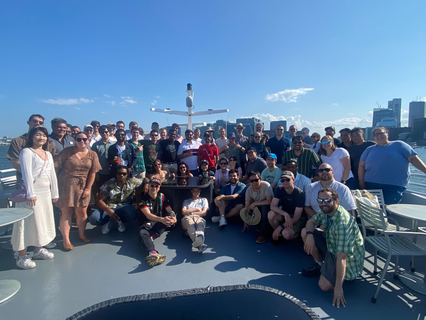
Hosts in-person all-hands meetings
Implements team-based strategic planning
Open office floor plan to encourage communication and collaboration
Uses an OKR operational model to clearly define goals and priorities
Utilizes an open door policy that encourages accessibility
