


About ASI
ASI's mission-critical technology powers decision-making across aviation, defense, energy, and other critical infrastructure domains. Backed by top-tier investors including Andreessen Horowitz, Spark Capital, and Renegade Partners, ASI delivers operational decision superiority—compressing days of analysis into seconds of action. ASI is leading the way and pushing the boundaries of what’s possible.
About the Civil Aviation Team
We are modernizing America’s air traffic control system on an accelerated timeline, tackling one of the world’s most complex real-time optimization challenges: safely coordinating tens of thousands of daily flights in a dynamic, safety-critical environment. Our team is building next-generation trajectory prediction and decision-support systems while preparing the airspace for emerging technologies like commercial space operations and advanced air mobility. This mission-critical work demands exceptional precision, resilience, and reliability to support the safety and efficiency of the national airspace.
What You Will Do
As an Optimization Software Engineer on the Civil Aviation team, you will design algorithms help track and plan trajectories for thousands of aircraft operating in the National Airspace System (NAS). You will use your knowledge of Operations Research (OR), optimization, statistics, and data science to design, analyze, and implement software to help monitor and control one the world’s most complicated airspaces in real time.
What We Value
Experience designing algorithms for mission-critical applications
Experience with various optimization algorithms, including linear programming, mixed integer linear programming, constraint satisfaction, greedy algorithms, etc.
Experience analyzing large data sets and using statistical and machine learning techniques to build models from them
Domain experience in logistics, aviation, or related fields where large scale planning is required
Experience with modern programming languages such as Rust and Python
Strong collaboration skills and comfort working across teams in a mission-critical environment.
Proficient in leveraging modern LLM tools to accelerate development workflows and enhance code quality.
How We Hire:
We look at the interview process not as a screening or test, but rather as an opportunity to simulate what it would look like working together. We build the interview process around you.
ASI works with export-controlled technology and restricted U.S. Government data, including on contracts mandating U.S. immigration status and location restrictions for performing personnel. Employment offers are contingent on ability to timely obtain all required authorizations for contemplated job duties.
Air Space Intelligence Boston, Massachusetts, USA Office
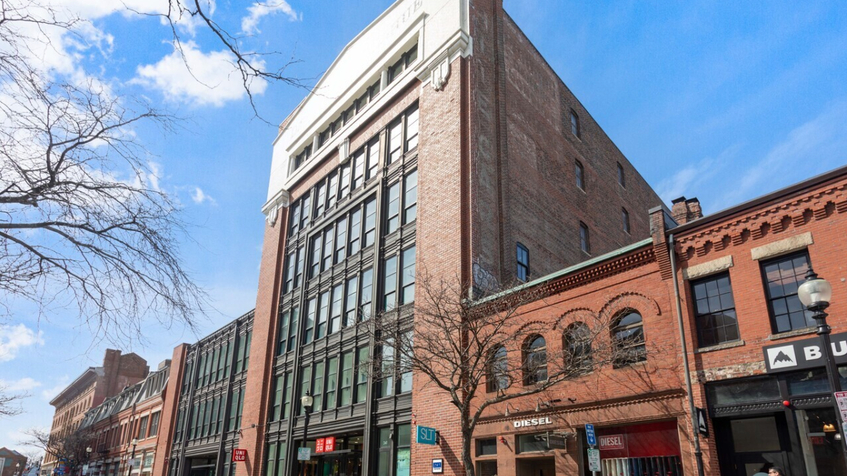
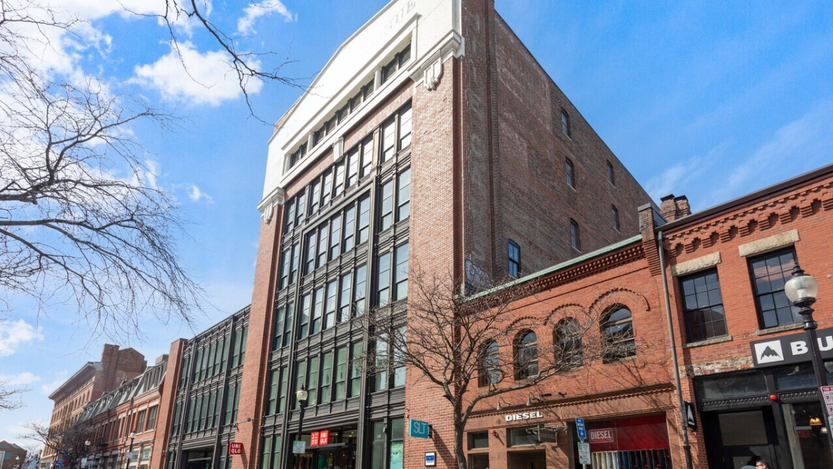
341 Newbury St., Boston, Massachusetts, United States, 02115
Similar Jobs at Air Space Intelligence
What you need to know about the Boston Tech Scene
Key Facts About Boston Tech
- Number of Tech Workers: 269,000; 9.4% of overall workforce (2024 CompTIA survey)
- Major Tech Employers: Thermo Fisher Scientific, Toast, Klaviyo, HubSpot, DraftKings
- Key Industries: Artificial intelligence, biotechnology, robotics, software, aerospace
- Funding Landscape: $15.7 billion in venture capital funding in 2024 (Pitchbook)
- Notable Investors: Summit Partners, Volition Capital, Bain Capital Ventures, MassVentures, Highland Capital Partners
- Research Centers and Universities: MIT, Harvard University, Boston College, Tufts University, Boston University, Northeastern University, Smithsonian Astrophysical Observatory, National Bureau of Economic Research, Broad Institute, Lowell Center for Space Science & Technology, National Emerging Infectious Diseases Laboratories
